
 Online Services
 Application Inquiry
 Pay Assurance Fee
 Query Installation Number
 Compensation Fee Inquiry
 Automatic Payment Order Inquiry
 Partnership
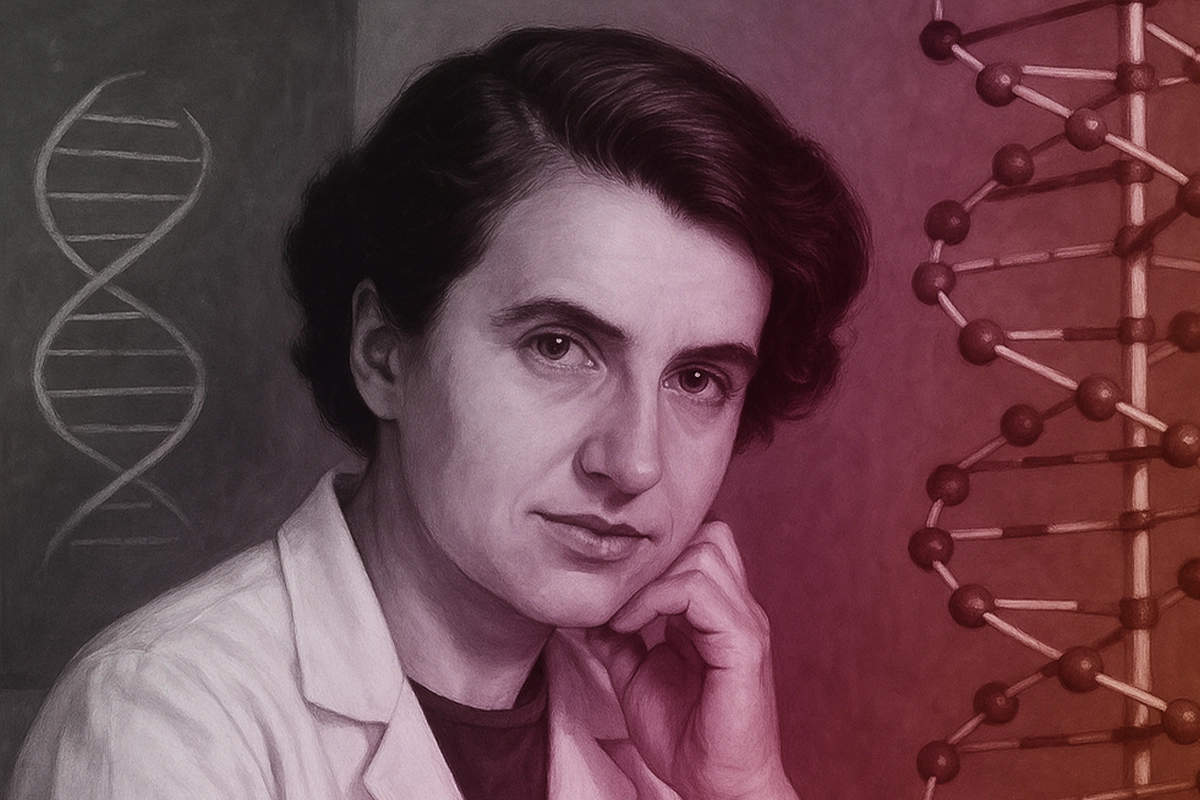
Who Was Rosalind Franklin? Her Life and Scientific Discovery
What is in this article?
The Life of Rosalind Franklin, Her Role in the Discovery of DNA Structure, and Her Impact on the Field of Bioenergetics
Although the phrase “unappreciated in their lifetime” is most commonly used for artists, there are many scientists for whom it is equally valid. Rosalind Franklin is one such figure. The significance of her scientific contributions and their impact on the world of science became fully recognized only years after her death.
Let us take a closer look at who Rosalind Franklin was, her pivotal role in the discovery of the structure of DNA, and the scientific legacy she left behind.
Rosalind Franklin: A Brief Look at Her Life – A Pioneer in Science
Rosalind Elsie Franklin was a British chemist and X-ray crystallographer, born on 25 July 1920 into a wealthy and well-educated family. Her research on DNA, RNA, viruses, coal, and graphite has secured her place as one of the most important figures in the history of science. However, Franklin’s achievements were largely overlooked during her lifetime due to the injustices she faced. She passed away in 1958 at the age of just 37.
Despite coming from a privileged background, pursuing a career in science was far from easy for women during Franklin’s era. After receiving her education at St. Paul’s Girls’ School—one of the few institutions at the time that taught physics and chemistry to girls—she continued her studies in 1938 at Newnham College, University of Cambridge. In 1941, she graduated with a degree in natural sciences and began her PhD in physical chemistry under Ronald George Wreyford Norrish, Head of the Department of Physical Chemistry at Cambridge.
Norrish’s lack of interest in Franklin’s work, combined with the changing circumstances brought about by the Second World War, marked the beginning of a new chapter in her life.
In 1942, Franklin joined the British Coal Utilization Research Association (BCURA), where she conducted research on the physicochemical properties of coal and carbon. During this time, she also served as an air raid warden during the London Blitz. Her work at BCURA enabled her to earn a PhD from Cambridge in 1945.
Between 1947 and 1950, Rosalind Franklin worked at the Central State Chemical Services Laboratory in Paris, focusing on X-ray diffraction. The expertise she gained there laid the groundwork for the research that would later make her one of the most influential scientists of the 20th century.
In 1951, she accepted a research fellowship at King’s College London. There, she was tasked with working on X-ray crystallography. However, after Maurice Wilkins returned to the department, the two struggled to establish a productive working relationship. Continuing her research with her student Raymond Gosling, Franklin succeeded in capturing images of crystallized DNA fibers.
This work, later known as Photograph 51, played a critical role in revealing the structure of DNA. However, Franklin did not receive recognition for this achievement. At the same time, James Watson and Francis Crick were conducting research on DNA at the Cavendish Laboratory. Without Franklin’s knowledge or consent, Wilkins shared Photograph 51 and Franklin’s data with them. This information confirmed Watson and Crick’s three-dimensional DNA model and led them to their breakthrough.
In 1953, Franklin left King’s College and continued her research at Birkbeck College. She passed away from cancer in 1958.
The studies carried out by Rosalind Franklin—particularly Photograph 51—were instrumental in enabling James Watson, Francis Crick, and Maurice Wilkins to receive the Nobel Prize in 1962. Despite her crucial contribution, her name was not acknowledged for many years, and her role was largely overlooked.
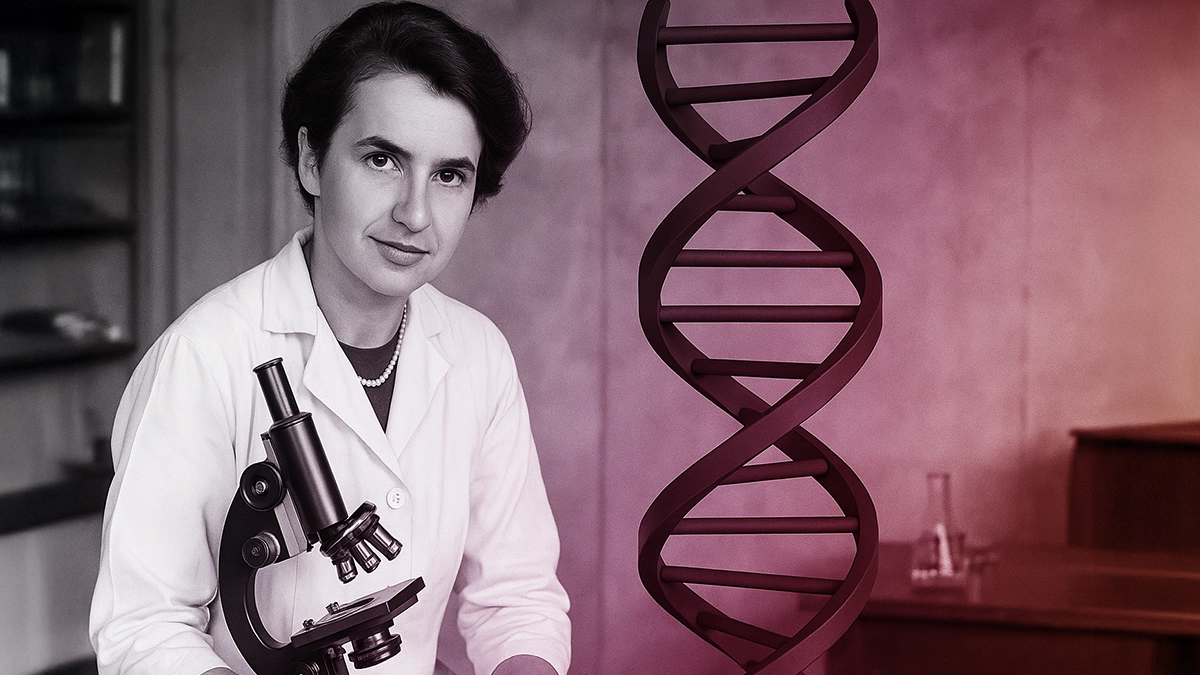 What Did Rosalind Franklin Discover? X-Ray Crystallography of DNA
Although Rosalind Franklin died at a young age, she is remembered for the groundbreaking scientific work she left behind. While her contributions were not fully appreciated during her lifetime, she is now widely regarded as the “hidden hero of DNA” within the scientific community.
This recognition stems from Photograph 51, the X-ray crystallography image that revealed the three-dimensional structure of DNA. The reason she is described as a hidden hero lies in the fact that her work was used without her permission by other scientists who later went on to receive the Nobel Prize, without adequately acknowledging her contribution.
Rosalind Franklin’s Role in the Discovery of the Structure of DNA
In the early 20th century, although the existence of DNA was known, its structure remained one of the greatest mysteries in science. Many researchers were racing to uncover it. In this context, Rosalind Franklin and her colleague Raymond Gosling succeeded in obtaining the X-ray diffraction image of DNA in 1952.
Their work clearly revealed the double-helix molecular model of DNA. Building upon Franklin and Gosling’s findings, James D. Watson and Francis Crick proposed the DNA structure that is still accepted today, publishing their model in 1953.
 The Importance of X-Ray Crystallography and “Photograph 51”
X-ray crystallography is a technique used to analyze the atomic and molecular structure of crystals and has enabled numerous scientific discoveries. The method is based on capturing images formed by the diffraction of X-rays directed at crystallized materials.
Thanks to her expertise in X-ray crystallography, Rosalind Franklin was able to obtain highly detailed images of DNA for her time. Photograph 51 revealed the structure of the B-form of DNA. Some scientists argue that Franklin may not have fully realized the importance of her findings because she was focused on solving the diffraction pattern of the A-form of DNA. Others maintain that her work was taken without her consent by Watson and Crick, resulting in her contribution being overlooked.
Rosalind Franklin’s Other Scientific Contributions
Although Rosalind Franklin is most widely known for her work on DNA, she made significant contributions to several other areas of science. Her research extended beyond DNA to include:
- Coal and graphite structures
- The tobacco mosaic virus
- The molecular structure of RNA
Through her studies on coal, Franklin uncovered important details about the graphite structure of carbon. These findings later contributed to developments in the coke industry and atomic technology.
From 1953 until her death, Franklin continued her research at the Crystallography Laboratory of Birkbeck College in London, focusing on coal and DNA. She also carried out extensive research on the molecular structure of the tobacco mosaic virus. Her discoveries related to the virus’s RNA are considered the final major contributions of her scientific career.
The Structure of DNA and Biomolecular Energy Systems
In its simplest form, DNA is a biomolecule that carries genetic information. All instructions for protein synthesis, as well as the storage and replication of genetic data, are encoded within DNA. Cellular biological processes operate according to this information, and these processes require energy to take place.
At this point, it is important to consider the relationship between DNA structure and biomolecular energy systems. Biomolecular energy is often confused with bioenergy; however, these concepts refer to different phenomena. The metabolic systems that supply energy to cells function based on the genetic information stored in DNA. For living organisms to survive, DNA and biomolecular energy systems must work in harmony.
Much of what we know today about DNA and biomolecular energy systems is rooted in the pioneering work of Rosalind Franklin and other scientists who studied DNA.
At this point, to better understand the concept of bioenergy as a distinct scientific term, you can also explore our article “What Is Bioenergy?”, which explains how biomass energy is produced and used.
 A Legacy from Science to Everyday Life
Rosalind Franklin’s story illustrates how scientific knowledge gains value over time and becomes an essential part of everyday life. Today, many of the advancements we benefit from—ranging from genetics and healthcare to technology and energy use—are the result of meticulous scientific research carried out decades ago.
At Aydem Perakende, we believe that this accumulation of knowledge, shaped by science, plays an important role in delivering energy to consumers in a reliable, transparent, and understandable way.
You can explore more inspiring stories of influential figures in the history of science and discover how scientific knowledge translates into everyday life by visiting our History and Scientists blog category.





Leave a Comment