
 Online Services
 Application Inquiry
 Pay Assurance Fee
 Query Installation Number
 Compensation Fee Inquiry
 Automatic Payment Order Inquiry
 Partnership
What is in this article?
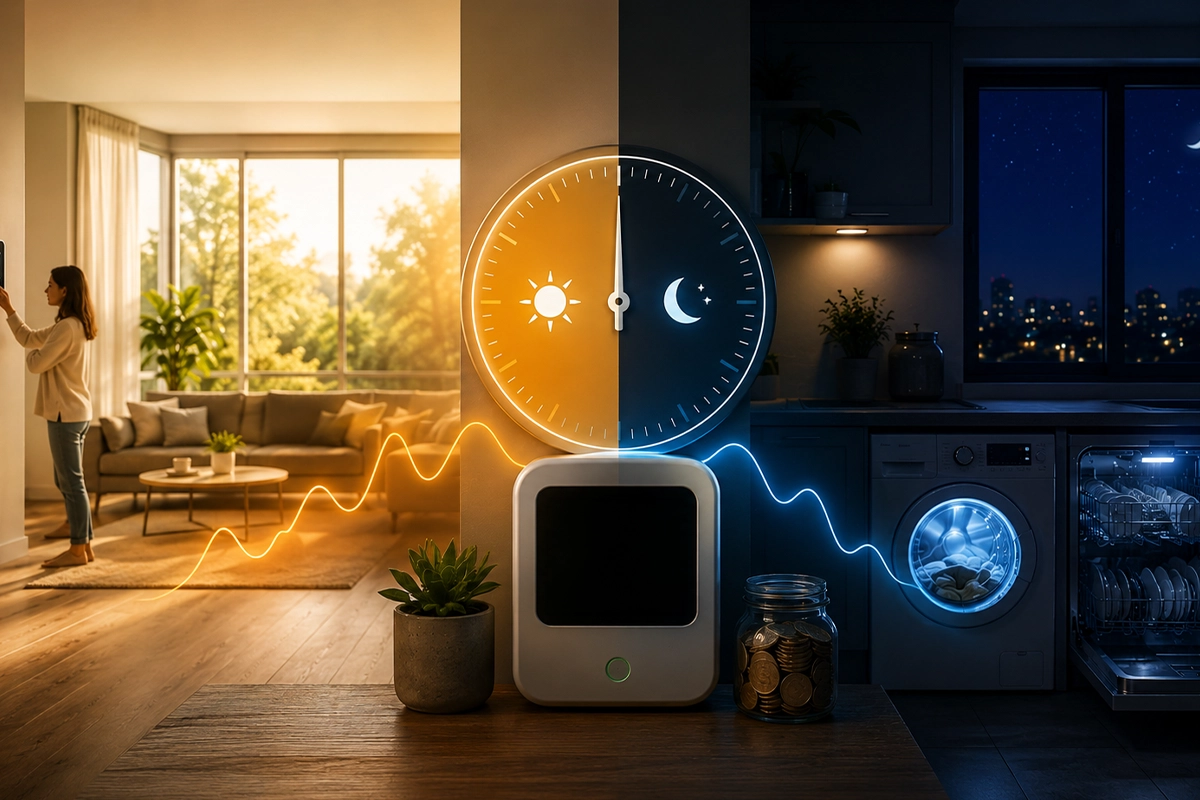
The moment you step into the house in the evening, you light up all the rooms and the kitchen appliances start to run one after another. The bill you see at the end of the month is shaped in that rush. The electricity bill depends on the energy consumed and its time of use throughout the day. Smart meters monitor energy consumption and help manage bills more efficiently. If you understand well the rhythm of life inside the house, you can benefit from the day and night tariff dynamics, leading to significant savings. Waiting for the right time to use the dishwasher and the washing machine directly affects the final amount you will pay. So, what time is the best to use your household appliances so that you get a more economical result?
.webp) What is the Day and Night Tariff?
What is the Day and Night Tariff?
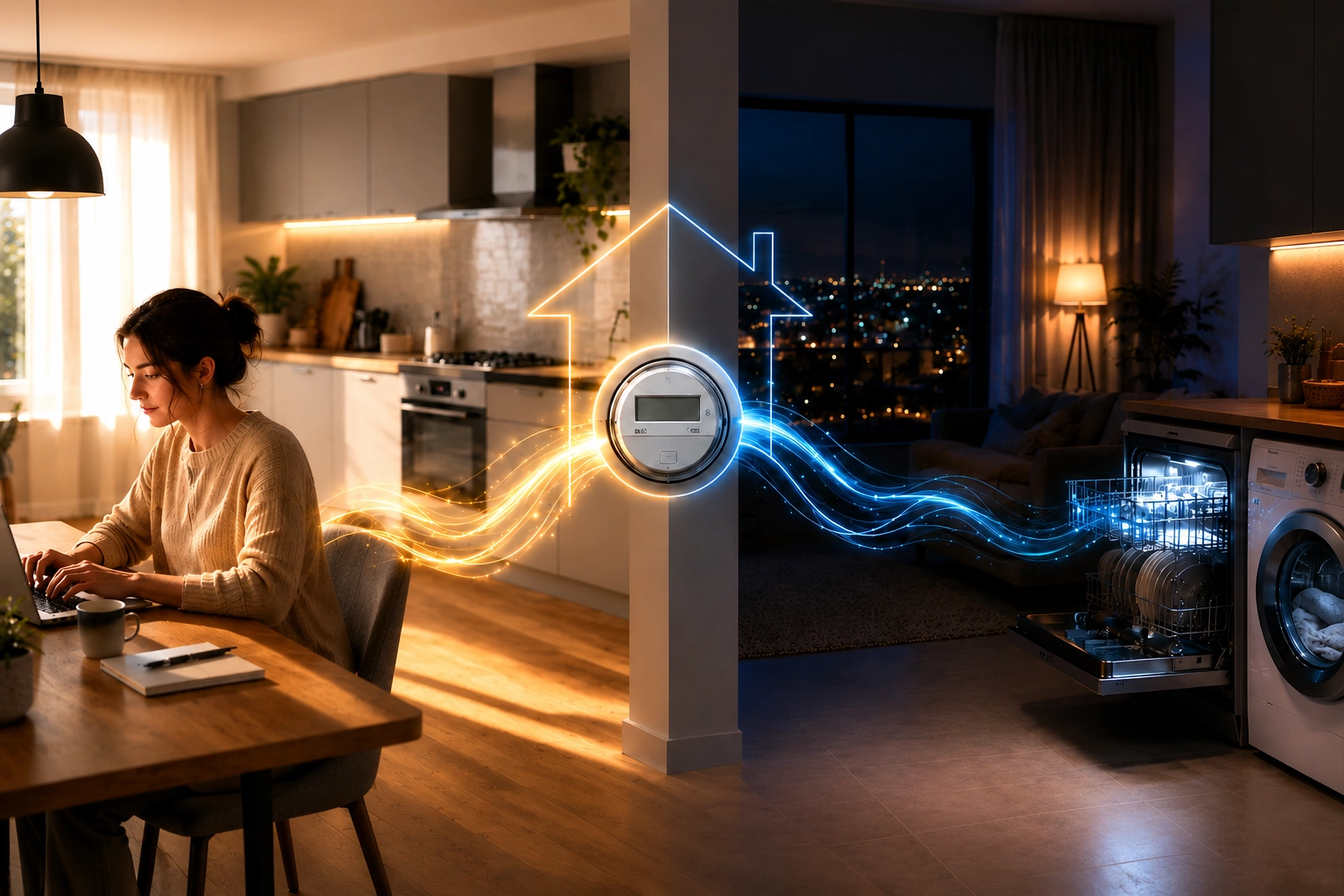
In standard electricity use, a fixed price is applied for all times of the day, while the day and night tariff divides the day into different periods, offering you different prices. The cost of energy production and the load on the grid keeps fluctuating throughout the day. In the evening, people come back home from work and load up on electricity, which causes the costs to go up; at night, on the other hand, when everyone is asleep, the grid relaxes and prices reach their lowest point.
Designed to direct consumers from peak usage times to less busy hours, this structure is basically an energy management system focused on preserving household budget. Shifting your energy use by a few hours is a practical way to take advantage of the benefits the night tariff offers. It is enough that you understand what times offer lower prices and organize your household work accordingly.
What Are Peak and Off-Peak Hours?
In the energy market, the timeframes when the energy demand is at is highest are called peak times. These times, when the daily life is at its peak; when ovens, irons and heaters are turned on at the same time, are the highest unit prices on the bill. In contrast, the times when the demand is lowest are called off-peak times. According to the national standards in 2026, peak and off-peak hours are calculated over three main timeframes:
- Daylight Period (06:00 - 17:00): These are the times when prices are average and daily tasks are done at normal costs. In the middle of the day, when the sun is at its highest point, electricity consumption is charged at the regular tariff.
- Peak Period (17:00 - 22:00): This is the period the consumers must pay the most attention to. In this timeframe when the electricity is charged at the highest price, you should limit the use of appliances that consume a lot of energy.
- Night Period (22:00 - 06:00): This is the off-peak time when the electricity is cheapest and the grid is completely relieved. The night tariff for electricity could also be from 23:00 to 08:00, depending on regional infrastructures or meter settings.
As Per the Permanent Daylight Saving Time:
In terms of the application of multi-time tariffs, for consumers whose consumption is measured through meters whose meter clock is not updated as per the continuous daylight saving time scheme, between the last Sunday of October and the last Sunday of March:
- Daylight Period: 07:00-18:00
- Peak Period: 18:00-23:00
- Night Period: 23:00-07:00
Between the last Sunday of March and the last Sunday of October:
- Daylight Period: 06:00-17:00
- Peak Period: 17:00-22:00
- Night Period: 22:00-06:00
For consumers whose usage is measured via meters that are continuously adjusted to permanent daylight saving time, throughout the year;
- Daylight Period: 06:00-17:00
- Peak Period: 17:00-22:00
- Night Period: 22:00-06:00.
 When is Electricity is More Economical?
Many people wonder what time the energy is cheaper, and the real answer to this question is which tariff you are using. If your tariff is multi-time, 22:00 to 06:00 is the best period to use electricity. However, there is one important point. If your tariff is Single-Time, the energy you consume will be charged at the same unit price for every time period throughout the day. The common belief that consumption during the evening hours would be cheaper is wrong.
The Relationship Between the Multi-Time Tariff and Day/Night Tariff
The system known as the day-night tariff is called the multi-time tariff in the official market. Pricing your consumption over three different time periods of the day, this system is easily adapted to any house with a digital meter. This means that the first step to benefiting from the night tariff is switching to the multi-time tariff on paper.
Once you switch to this system, your energy routine at home will be reshaped with the opportunities offered by the multi-time tariff. While you pay the same unit price throughout the day in the single-time tariff, the multi-time tariff gives you total control over time. Knowing what you’ll pay and when allows you to avoid unpleasant surprises on your bill.
How to Get the Highest Benefit from the Night Tariff
Getting true benefits from this system requires a complete shift in how you use energy. The first big step is to minimize energy consumption in peak hours, i.e. from 17:00 to 22:00. Not using the appliances that consume a lot of energy during this time, when people return home from work, helps prevent the main spike in your bill.
Secondly, if you have appliances with a time delay function, setting them to run after 22:00 will make it easier for you to manage your household budget. You can check the savings assistant tools and reshape your usage habits in order to see your potential at home more clearly and learn how much you can save in certain areas. You can get a more balanced payment table every month by only changing some habits.
Tariff Options by Aydem Perakende and the Application Process
It is totally up to you to ensure that the time runs in your favor after truly analyzing the rhythm of life at home. Choosing the right tariff is the best way to balance out energy expenses. Unlike traditional methods, switching to a system that is suited to your usage habits takes only a few minutes thanks to the convenience of online processes.
Once the request for a tariff change is sent through digital channels, the new calculation system will be used in the first billing period. Once you start to take control of the time and appliances at home, you will see the positive reflection of small changes in planning from the very first month on your bill.
Frequently Asked Questions About the Day and Night Tariff
Is the Day and Night Tariff applied in Türkiye?
Yes, this tariff called the multi-time tariff is applied in Türkiye for all subscribers with a digital meter. You can use this tariff by paying attention to the relevant time periods.
What is the time period for the night tariff?
Usually it starts at 22:00 in the evening and ends at 06:00 in the morning. However, it could also be from 23:00 to 08:00, depending on the settings of your smart meter and regional infrastructure.
What is the calculation method for the advantages of the night time unit price?
Your consumption during daytime and peak hours is added up separately from your night time usage, and each one is multiplied by its own unit price. The energy you consume at night is reflected on the bill at the lowest amount according to the peak time.
What are the conditions for applying to the night tariff?
The process is quite simple. The only condition is that you have an electronic (smart) meter at home. You can quickly send an application online or at a customer application center to easily switch to this system.


.webp "Who is an Eligible Consumer? Who Can Be?")
Leave a Comment