
 Online Services
 Application Inquiry
 Pay Assurance Fee
 Query Installation Number
 Compensation Fee Inquiry
 Automatic Payment Order Inquiry
 Partnership
What is in this article?
When you check your electricity bill at the end of the month, the first thing that comes to mind is if it is too high. Home-cooked meals, washing machines and all the lighting turn into a fee in the end. In the past, the only factor affecting the bill was your total energy consumption. But today, a more detailed math underlies this calculation. Your bill is calculated based not only on how much electricity you have used, but also on which limits you have exceeded.
If you correctly read your energy use at home, you will notice that there is a very simple way to consume electricity without going over your budget. Understanding this system is the best way to balance out your monthly payments. If you want to be able to correctly read the details on your bill and choose a suitable option amongst the electricity tariffs available, it would be best to take a look at how consumption limits work. So, how does the system that changes your monthly bill work?
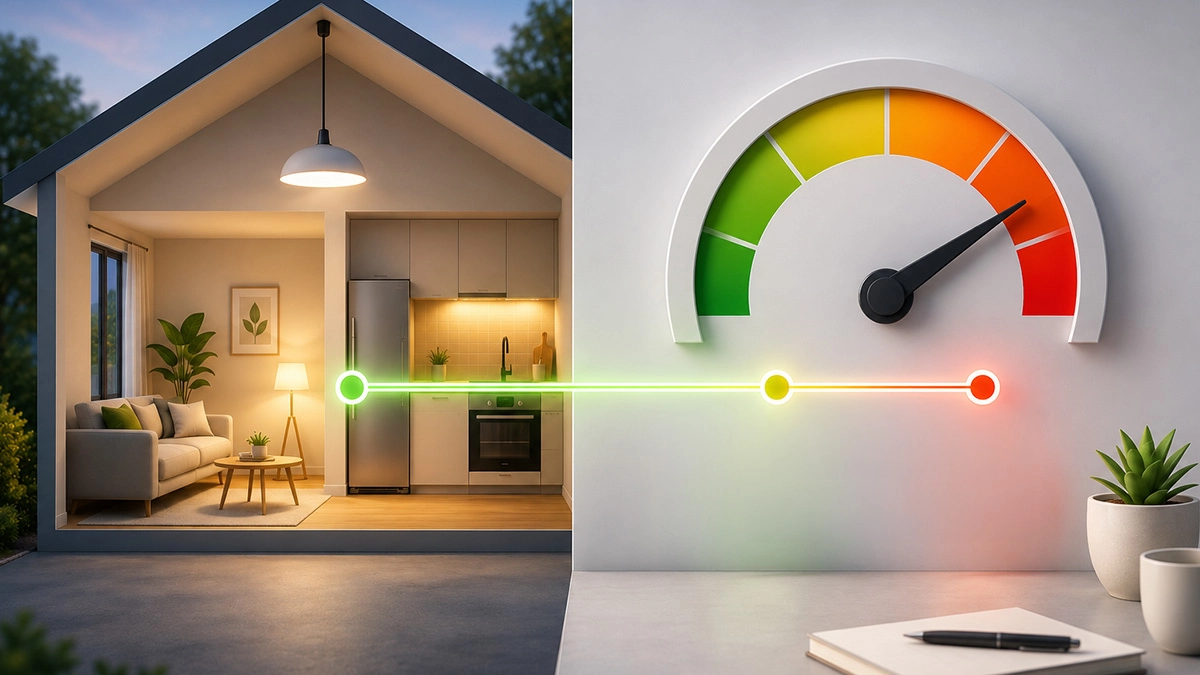 What is the Tiered Tariff?
There is a clear answer to this question, which pops in your mind when checking your bill. This system includes a dual-rate calculation model aimed at encouraging energy-efficient use. The main logic is that consumption up to a certain consumption limit is charged at a lower rate, while any consumption above this limit has a higher price.
Think of your electricity use at home like a staircase. In the first steps, the cost remains low. However, if you increase your usage and go over to the next step, you will pay a higher price only for the exceeding portion. It is not that your whole bill will suddenly change to a more expensive tariff. Only the portion that exceeds your set limit will be charged at the higher tariff. Aiming to increase energy efficiency, this structure also directly affects household finances. If you understand this system and keep your consumption below limit, you will see that the tiered tariff is a shield for your budget.
How Do the Consumption Steps Work in the Tiered Tariff?
The main rule that sets the prices on your bills is the limits integrated in the system. Called electricity consumption steps, these limits clearly show how much electricity you can use at the lower rate. According to the standards set forth by the Energy Market Regulatory Authority (EPDK), this limit is 8 kWh on average per day for household subscribers.
Bills are typically issued over a 30-day period. If you multiply the daily limit of 8 kWh by 30 days, you will get a net amount of around 240 kWh. This 240 kWh is your first and cheapest consumption step. This means that you will use electricity at the lowest price until all appliances at home reach 240 kWh in total over the month.
There is another detail you must pay attention to. In some cases, meters can be read on the 28th or 32nd day. In this case, the system multiplies your daily 8 kWh limit by the number of days in the billing period in order to protect your rights. If your billing period is 32 days, the low-rate consumption limit is automatically raised to 256 kWh. This dynamic structure prevents unfairly high bills.
How Does the Tiered Tariff Look on the Bill?
Reviewing an example will help you clearly understand the impact of this system on your budget. For a successful tiered tariff calculation, all you have to do is look at the total consumption amount on your bill.
Let’s assume that you consumed 300 kWh at home over a 30-day period. The system will not calculate all of this 300 kWh over the higher price. It will first sort out 240 kWh, which is your low tier right. It will multiply this 240 kWh by the first tier price. The remaining 60 kWh, on the other hand, will be multiplied by the second-tier higher price as it exceeds the limit. Then, the system will add up these two values, include taxes and issue the final bill.
Once your consumption exceeds 240 kWh, each kWh of electricity will become a heavier burden on your budget. For this reason, the impact of the tiered tariff will be much heavier on your bill once you have exceeded the limit. The difference between a month where 230 kWh is consumed and a month where 260 kWh is consumed is more than a simple energy difference of 30 units. If you use the right logic to calculate the tiered tariff, you can easily guess the amount of your monthly bill. You can then think twice before running the washing machine on days you noticed you have exceeded the limit. This system offers this exact awareness and allows for significant savings.
The Difference Between a Tiered Tariff and a Single-Time Tariff
The differences between tariffs can sometimes be confusing. A single-time tariff is a basic model where electricity is sold over the same price at all times throughout the day. It doesn’t matter what time you use the energy. A tiered electricity tariff, on the other hand, is a volume limit integrated into this structure.
When you use the single-time tariff as a standard residential subscriber, you will be automatically included in this tiered system. The single-time tariff does not consider the time, while the tiered system considers the total amount. Thoughts like “I’m on a single-time tariff, so the tiered tariff does not apply to me” are not reality. The moment your monthly consumption exceeds 240 kWh, the cheap single-time rate will go up by one step. Understanding that these two concepts complete each other will make your energy management easier.
How to Save Energy in a Tiered Tariff
Keeping your bill under the limit of 240 kWh is actually not that hard. When you change a few small habits inside the house, staying below this limit will turn into a routine practice.
First, you can start by unplugging the appliances that consume electricity in stand-by. The TV you think is turned off and the chargers left plugged in will consume electricity throughout the day, getting you closer to the limit. Unplugging them or using a power strip with a switch will help you significantly reduce your energy consumption.
Replacing old bulbs with the LED technology is one of the best moves to lower your bill. Traditional bulbs turn majority of the energy into heat, while LED bulbs incredibly reduce your electricity consumption. Avoiding half loads in dishwashers and washing machines, ironing all your laundry in one go, and not leaving the fridge door open will help you stay below that critical limit. When you combine these habits with discounted electricity prices, you will get a permanent solution for your monthly expenses.
Tiered Tariff Details for 2026
In parallel with the developments in the energy market, tariff limits and prices are regularly updated. For 2026, the critical limit for residential subscribers remains 8 kWh per day, and 240 kWh per month over a 30-day period. Protecting consumers against increasing costs, this limit acts as a safety barrier.
The increased need of heating in winter or heavy use of air conditioners during summer causes consumers to quickly exceed the limit of 240 kWh. According to data for 2026, the price difference between the first and second tiers in the tiered electricity tariff has become quite clear; this makes savings even more meaningful. Once the consumer goes up the second tier, the increase on the bill becomes quicker. So, regularly checking your consumption history is of great importance. Using energy efficiently is the first rule of budgeting in 2026.
Tariff Options by Aydem Perakende
It is up to you to remain within limits and protect your budget while meeting your energy needs. If you keep your daily consumption under control, you will clearly see the reduction on your bills. Using LED bulbs, unplugging chargers or washing your laundry in one go will make a real difference in your budget at the end of the month.
If you make an energy plan that suits your habits, you can directly manage your monthly expenses. As you check and track your bills, you can easily notice the habits you can change at home. It is possible to remove the burden on your budget by using energy efficiently.
Frequently Asked Questions About the Tiered Tariff
What is Tier 1 and Tier 2?
Tier 1 is your household electricity consumption that is up to the daily limit of 8 kWh (240 kWh on average per month). It is charged at the lowest unit price. Tier 2 is the portion that shows excess consumption, which applies once you exceed this limit and is calculated at a higher unit price.
What is a tiered electricity tariff in 2026?
Applied in 2026, this tariff is an official billing system for household electricity, where consumption up to a certain limit is charged at a lower price, and the portion that exceeds this limit is calculated at a higher rate. The aim is to protect low-budget households and encourage energy efficiency.
What is the kW value in tiered tariff?
For residential subscribers, this limit is 8 kWh per day in Türkiye. This value depends on your billing period; for a standard reading of 30 days, the limit is exactly 240 kWh.
.webp "Who is an Eligible Consumer? Who Can Be?")




.webp "Household Appliances with the Highest Power Consumption Ranked in Order")
Leave a Comment